An apocryphal story from the Western Isles. A well-travelled visitor to the Isle of Lewis is trying to explain the Spanish concept of "mañana" to an elderly resident of the Isle of Lewis. "It means, well, tomorrow. But not necessarily tomorrow — it could be the day after, next week. You know, some indeterminate time in the future". The old boy sits back on the bench outside his croft, thinks about this for a while, and then says "Aye, I see, I see. Yes. Yes. No, in the Gaelic tongue we have ... no term for such, hmmm ... undue haste".
This is a (slightly) laboured analogy to the state of shared building repairs across Scotland today. Most building have problems, but unless an organised resident group or a good factor is involved, too often issues become "tomorrow problems". The barriers to action — raising the problem with neighbours, getting agreement on budgets and payment, finding a reputable trader to complete the work — mean that too often urgent repairs are pushed back or ignored. That leaky downpipe, the wonky lock on the door, the missing roof tiles — yes, they need fixing, but — acht, what a hassle, I'll think about it tomorrow...
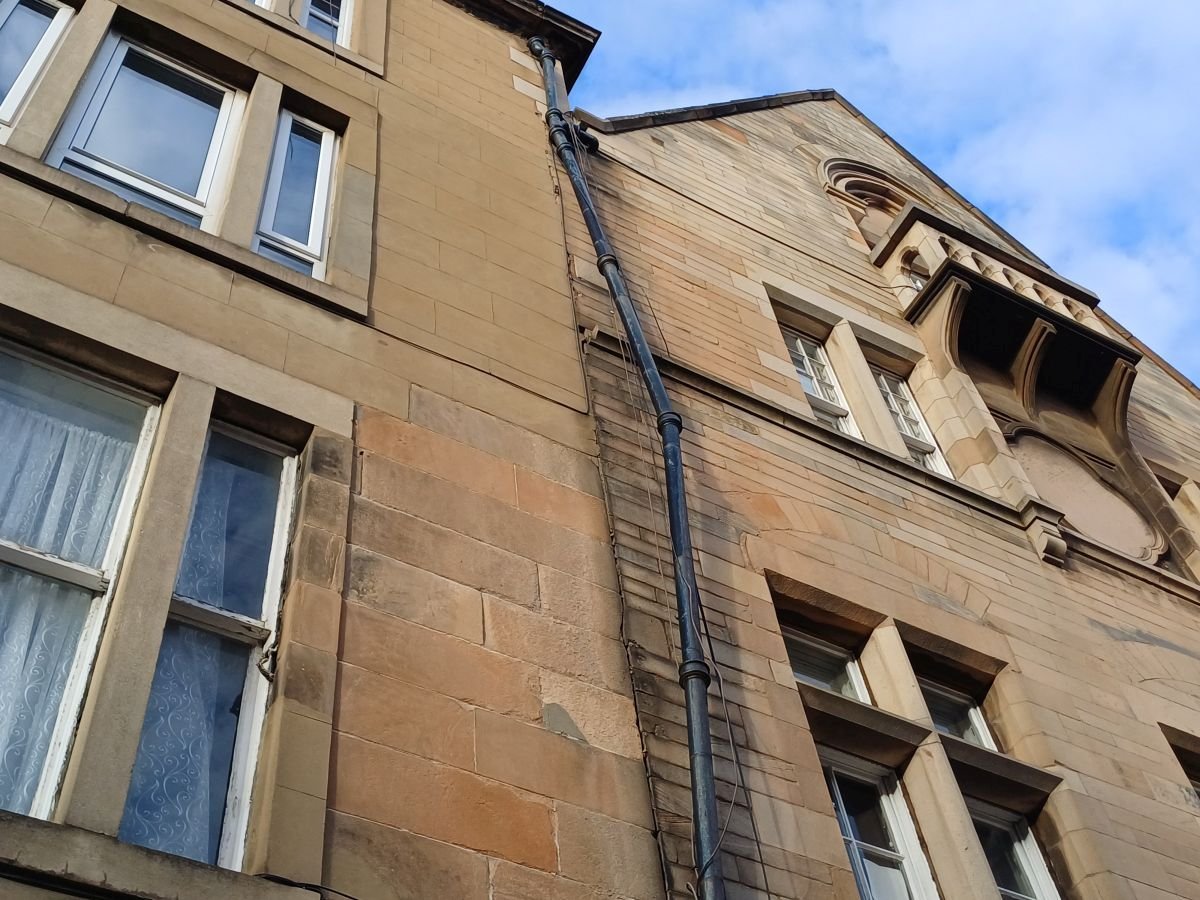
This isn't to say that our older housing stock is inherently bad. The large areas of sandstone tenement buildings across Glasgow, Edinburgh, Stirling and many of Scotland's smaller towns are amazingly well-designed "living engines" — built by skilled Victorian architects, engineers and craftsmen and using materials fit for their purpose. Ventilation and weather-proofing were built in, and most of these buildings have lasted for up to 150 years with no major issues. But over the last few decades more internal plumbing, central heating, sealed windows, higher temperatures and more severe weather patterns have all taken their toll, along with the natural degradation of stone and timber. A lot of our heritage buildings are now approaching critical levels of disrepair.
Compulsory Owners’ Associations for Tenements: what it could mean in practice
The Scottish Law Commission report is aimed at slowing and hopefully reversing this situation. It recommends making Owners' Associations compulsory for all tenement/shared buildings in Scotland. Under these recommendations, every multi-owner building would automatically form a legal association responsible for maintenance, budgeting, and decision-making, with duties like appointing a manager and holding an AGM.
For residents, this could mean clearer responsibility, faster repairs, and less conflict over shared works. It could also strengthen the role of professional factors, who can be appointed to manage the association and ensure consistent upkeep.

In practical terms, compulsory associations could encourage proactive maintenance planning, reduce delays caused by non-engaged owners, and make it easier to agree and fund shared improvements.
Case study: communal buildings in Spain
Owner's Associations have been mandatory in many European countries for a long time, providing a route for residents to maintain their building value and coordinate with councils and contractors
A key argument in favour of compulsory Owners’ Associations is that similar models already operate successfully across much of Europe. In many countries, shared ownership is underpinned by automatic legal communities that manage common parts, collect contributions, and make binding decisions.
These systems tend to normalise collective responsibility from the outset, reducing ambiguity and limiting the scope for long-running disputes over maintenance and costs.
Spain is often cited as a clear example, where the Ley de Propiedad Horizontal (Horizontal Property Law) has governed apartment buildings for decades. Under this framework, owners automatically become members of a community with defined voting rights, mandatory contributions, and enforceable decisions.
While disagreements still occur, the existence of a clear legal structure means they are resolved within an established system rather than through ad-hoc negotiation or stalemate.
The Spanish experience suggests that compulsory participation does not undermine individual ownership, but instead provides a stable platform for managing shared assets — a lesson that could be particularly relevant for Scotland’s ageing tenement stock.
A consistent baseline for shared buildings
Beyond the immediate day-to-day benefits, the proposals aim to create a more consistent legal baseline across Scotland’s diverse housing stock. At present, responsibility for shared repairs can vary depending on title deeds, building age, and past practice.
A compulsory Owners’ Association would replace this patchwork with a uniform structure, reducing uncertainty for owners and making it easier to understand who is responsible for what — particularly for buyers moving between different types of shared buildings.
In principle, a compulsory association could bring:
- Clear accountability: a defined body responsible for organising shared maintenance
- Planned budgeting: predictable contributions rather than sudden emergency bills
- Faster decisions: fewer delays caused by hard-to-reach or disengaged owners
- Support for management: clearer routes to appoint a factor/manager where needed
- Better building condition: less drift into disrepair through inactivity
What owners may worry about
Compulsory participation will inevitably raise concerns about cost, control, and enforcement. Owners may worry about increased factoring fees, mandatory contributions, or being outvoted on spending decisions.
If implemented well, safeguards would likely need to include:
- Transparent accounting and accessible reporting
- Clear voting rules and decision thresholds
- Fair dispute resolution for contested works or costs
The concept is strong — the success will be in the detail of how it’s applied day to day.
Why the structure matters in real life
Shared buildings don’t typically fail because owners disagree about the importance of maintenance — they fail because the process is unclear, inconsistent, or too easy to stall.
- Urgent repairs delayed because nobody is empowered to instruct works
- Costs disputed due to unclear splits or missing paperwork
- Buildings slipping into disrepair as issues accumulate gradually
- Strain between neighbours when one or two owners carry the organisation burden
- Higher overall spend when planned works become emergency works
In that context, a mandatory Owners’ Association is less about "more rules" and more about making sure decisions can actually be made and acted upon.
7days takeaway
Compulsory Owners’ Associations address real weaknesses in how shared buildings are currently managed.
European experience suggests the model can work — but only if costs, powers, and accountability are clearly defined.
Addressing the issue now will mean property retains value and tenements are future-proofed.
The role of professional management
One practical outcome of compulsory Owners’ Associations is that it could strengthen the route to appointing a manager or professional factor, particularly where buildings are struggling to coordinate works.
Done well, professional management can:
- Schedule inspections and plan cyclical maintenance
- Build transparent budgets and sinking funds
- Run decision-making fairly, with records owners can rely on
Not every building will want or need the same level of management, but a standard association model makes it easier to choose what fits — and to change course when it doesn’t.

Ultimately the proposals are aimed at making shared ownership function more like a system and less like a negotiation. If they're implemented with clear rules, transparent costs and accessible dispute resolution, compulsory associations could help tenements stay in better condition, reduce conflict and prevent maintenance from becoming a recurring crisis.
Key details will include how decisions are made, how contributions are enforced, what protections exist for owners on tight budgets, and how professional management is regulated. Those practical choices will determine whether the model feels supportive, or simply additional red tape.
At 7days we're watching with interest to see how this develops so we can get ahead of any concrete proposals. While some of out team are Stornowegians by heritage, we like to move a bit faster than our old crofting gentleman.
Further reading & video
- Final Report: Tenement law — compulsory owners’ associations (PDF)
- Project page (resources + draft Bill info)
- Discussion Paper (PDF) on compulsory owners’ associations (Apr 2024) (PDF)
- News release (PDF): publication of the final report (11 Dec 2025)
- YouTube: Overview of final report — Professor Frankie McCarthy
IMAGE CREDITS: Barcelona tenements by Kaspars Upmanis on Unsplash
Ready to try 7days?
Find out how to minimise your
maintenance hassles and start saving: