Storm response
Our phones have barely stopped since Sunday. The storm caused the damage, but in many cases maintenance history decided the outcome.
Storm Boelo crossed Scotland over the weekend, and since Sunday morning the 7days team has been responding to calls and emergencies from owners across our stairs: chimney damage, missing slates and water coming into flats; the usual issues when looking after a shared roof.
The storm
Storm Austen brought heavy rain to much of Scotland on Friday 23 October, so the ground and the buildings were already saturated. Storm Boelo followed with an amber wind warning for mainland Scotland from Saturday night into Sunday. Overnight gusts reached 85mph at Machrihanish, more than 30,000 homes and businesses in Scotland lost power, and there was flooding in the west, including Glasgow and Largs.
Another low-pressure system, with a further wind warning for northern parts, is forecast for the following days. For a roof that has already lost a few slates, a second spell of wind and rain is where a small repair can turn into a flooded top-floor flat.
What we have seen since Sunday
The pattern across our calls has been consistent; the same three problems account for most of it:
Loose or collapsed chimney heads, with masonry falling onto roofs, back courts and pavements.
Slates lifted by the wind, often where nails or fixings had already corroded.
Rain through the gaps, showing up as stained ceilings and wet walls, often in flats below the damage.
Storms will find the weak spots
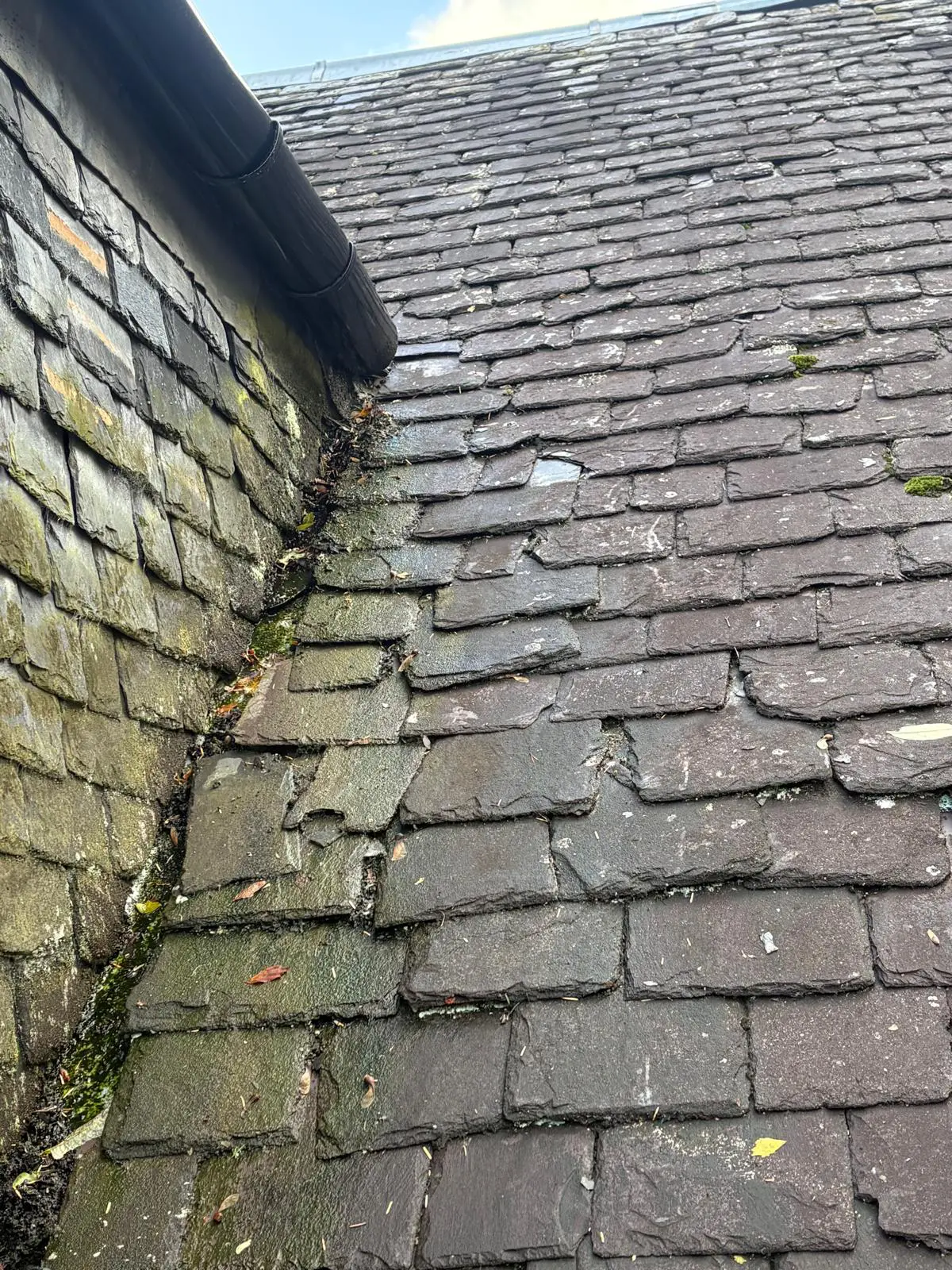
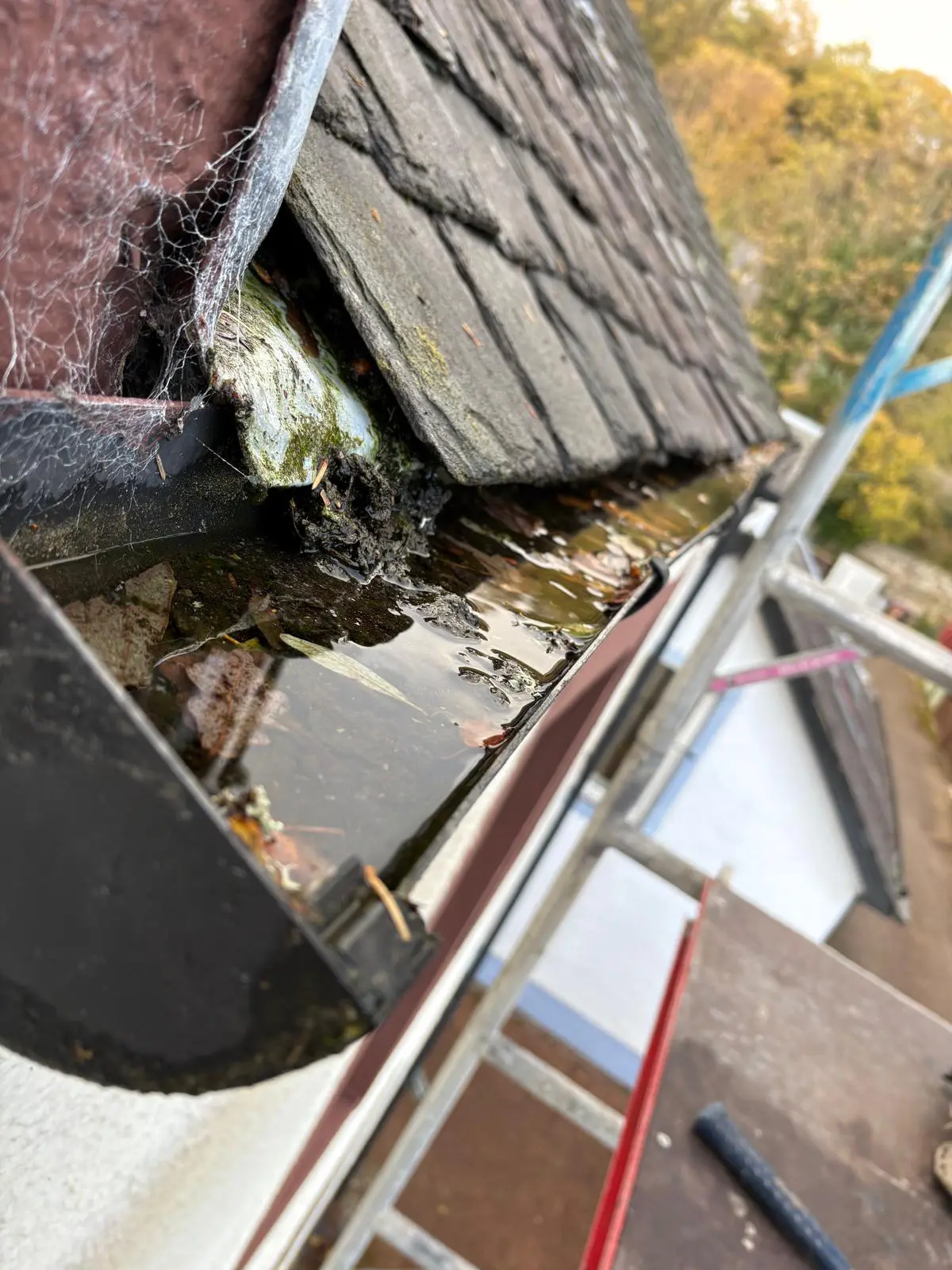
A well-fixed slate roof with sound flashings and a pointed chimney head will usually ride out a storm like this. What usually fails is areas thar were already marginal: slates with rusted nails, lead flashings that have lifted, eroded chimney pointing, gutters and downpipes blocked with moss and debris so water backs up under the slates (see our series on communal drainage).
None of those weaknesses is dramatic on a dry day, and from the street they are hard to see. In a shared building they also tend to be nobody's job until something comes down. Fortunately our contractors and insurers have been doing a sterling job, getting roofs and gutters patched up and assessing damage and repair cover.
Planned preventative maintenance
Planned preventative maintenance (PPM) means inspecting the roof, chimneys, gutters and downpipes on a schedule and fixing small defects before the weather finds them. It is cheaper, calmer and easier to agree than emergency work for three reasons:
- Small repairs stay small. Re-fixing a handful of slates or re-pointing a chimney head costs a fraction of repairing the ceilings, joists and decoration below once water has got in.
- Costs are shared in advance. A planned repair can be discussed, quoted and funded across the stair. An emergency lands on everybody at once, often with access equipment and out-of-hours rates.
- The building stays wind and watertight. The roof's job is to keep the weather out. Every missing slate or failed flashing is a route in, and water travels well beyond the point of entry.
A sensible minimum is a roof and gutter inspection once a year and another after any major storm, with chimney heads checked at the same time. A photographic record from each visit also helps with insurance, as covered below.
Takeaway
Inspect before the storm, not after it
The owners with the least disruption this week are, by and large, the ones whose roofs and chimneys had been looked at recently. A regular inspection is the cheapest protection a shared building has.
Block insurance: what it does and does not do
Storm damage is a standard insured risk on a buildings policy, and a communal block policy is how a stair pays for damage to the roof, chimneys and structure without each owner funding it alone. A few points are worth checking now rather than at claim time:
- Maintenance matters. Insurers can decline or reduce claims where damage comes from wear and tear or lack of maintenance rather than from the storm itself. Inspection records help show the building was looked after.
- Check the excess. A single storm can produce several separate claims. Know the excess and whether it applies per claim or per event.
- Check the sum insured. It should reflect the cost of rebuilding the building, not its market value. Our insurance benchmarking guide and reinstatement page explain how.
- Notify early. Tell your factor and the insurer as soon as damage is found, and keep temporary repairs reasonable and documented.
Policy terms vary, so read yours or ask your factor. Do not assume a particular repair is covered.
If your stair was hit
- Safety first. Keep people away from falling masonry and slates, and report an unsafe chimney or roof to your factor immediately.
- Make it safe and stop water getting in. A temporary repair can limit further damage. Keep the work proportionate and keep receipts.
- Record everything. Photograph the damage, inside and out, with dates.
- Report it. Contact your factor and the insurer, and tell the neighbours below the damage so they can check their ceilings.
- Be wary of door-knocking roofers. After a storm, unsolicited offers of cheap repairs are common. Get quotes through your factor or a contractor you can check.
If your stair is managed by 7days, call us and we will take it from there. If it is not, this is the sort of week where having a factor who answers is worth it. See how switching works.
Further reading
Met Office
Warnings and updates for the storm and the system following it:
Amber warning issued for Storm Boelo as Storm Austen moves through