Shared space
Ask most tenement residents what's out the back and the commons answers are the bin store, maybe a rotary line, grass cut twice a summer, or "the jungle". It doesn't have to stay that way, and making it better doesn't mean more work for anyone.
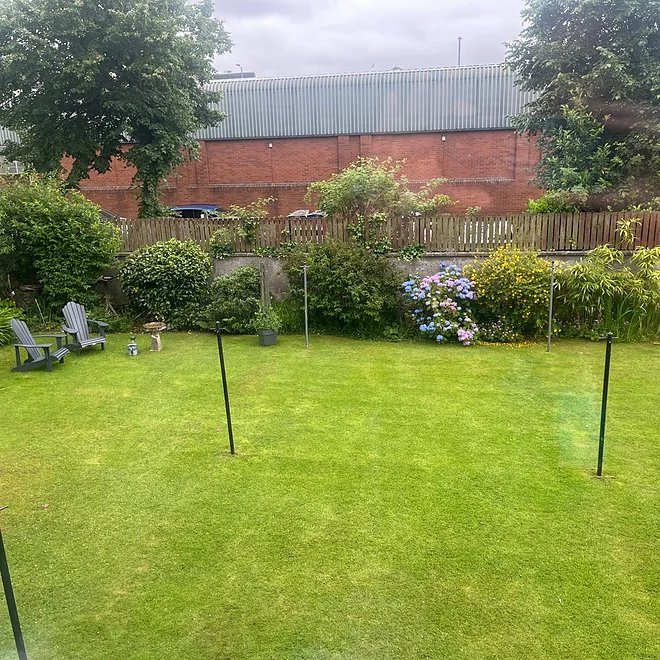
Scotland's tenements pack more households onto less ground than almost any other housing type, and the shared garden behind the building is usually the only outdoor space that comes with the flat. Yet ask around any close and the answer is the same: it's somewhere the bins live, not somewhere anyone sits. Over a quarter of Glasgow's homes are tenement flats — a large slice of the city's private outdoor space sitting underused and either mown into a green desert by a contractor working to a maintenance spec or left to grow wild with self-seeding weeds and trees. A little thought can change that, and can lower the ongoing bill rather than raise it.
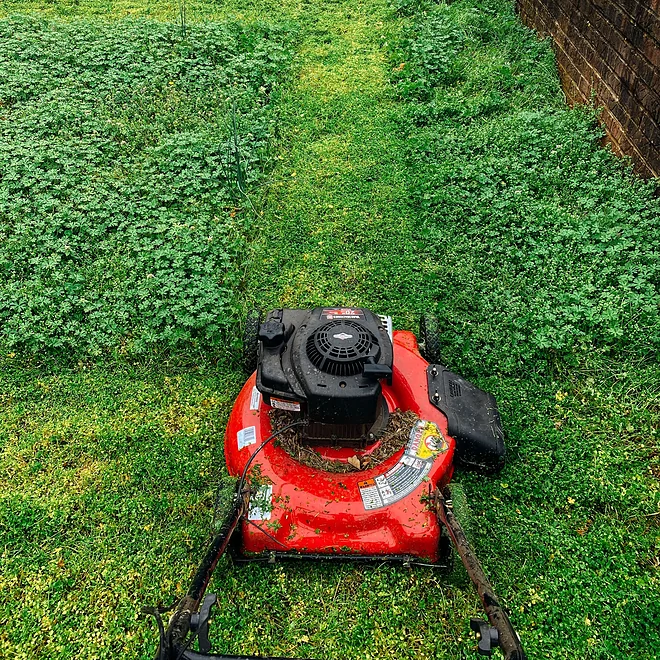
Common property, individually owned strips, or something in between — it's rarely obvious just by standing in it.
Most factoring contracts specify a mow, not a design — so that's exactly what gets delivered, visit after visit.
That's the share of the city's housing stock in tenements — and the scale of shared garden space that comes with it.
Who's actually responsible for the green bit
Before planting anything, it's worth knowing who actually owns the ground. Responsibility for a tenement's back green comes down to the title deeds, not custom or convenience, and it varies more than many people assume. In many closes the garden is common property under the Tenements (Scotland) Act 2004, shared and maintained by every owner in the building. In others — cottage flats and four-in-a-blocks especially — each ground-floor owner holds their own strip outright. Occasionally the title to the land belongs to one owner even though everyone has traditionally used it, which is exactly the kind of arrangement that can cause friction when someone finally wants to change something.
A section fenced off informally over the years doesn't move the title — it just means the deeds and the reality on the ground have drifted apart. Anyone planning real changes should start by reading the deeds, not by asking the neighbours what they remember.
Why it can be more than "cut the grass"
"Cut the grass" is the entire maintenance ambition for most shared tenement gardens, and it shows. A strimmer doesn't distinguish between a weed and a wildflower, so everything gets levelled to the same short, uniform green. Low effort for the contractor, low value for everyone else, and someone in the close is paying for it regardless.
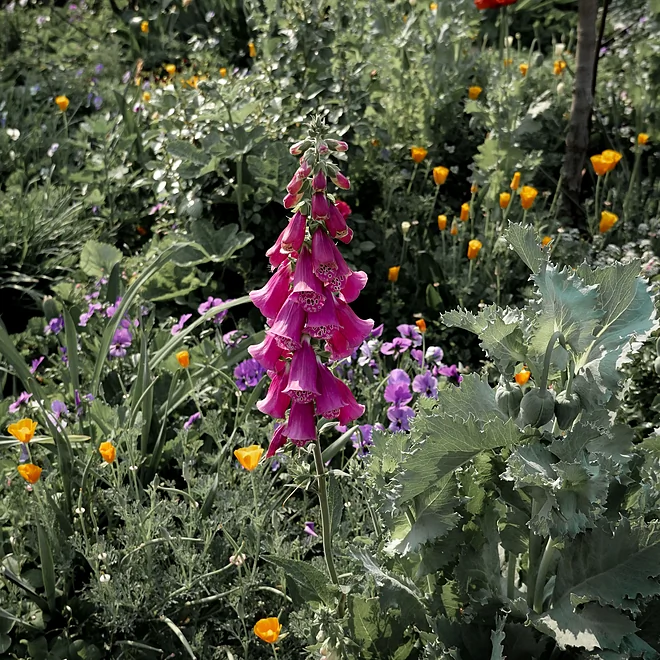
The alternative isn't neglect but a different kind of care. A wildflower strip left uncut through late spring, a mixed border instead of a mown edge, a log pile tucked in a corner (saves on garden waste trips or costs) — these need less routine attention than a lawn, not more, once they are established. One Glasgow tenement resident who spent four years turning a shaded, waterlogged back green into a small wildlife garden put it simply: with some clearing and pruning, and as little digging as possible, the space now mostly looks after itself. The bird count went from one dunnock in an hour to resident bullfinches, tits and a blackbird — and an orchid that turned up in the lawn on its own.
None of that required specialist skill or budget, just someone deciding the garden was worth more than a monthly strim, and a factor or committee willing to let the maintenance spec change to match.
On the record
"With some clearing and pruning, but as little digging as we can, the garden mostly looks after itself."
— A Glasgow tenement resident, on four years of low-intervention gardening for wildlife
Whose job is it — the factor's or the residents'?
In practice, most shared gardens sit between two parties: the factor, who holds the maintenance contract and answers to the whole close, and the residents, who are the only ones who'll actually notice if it improves. Neither can do much alone: a factor won't redesign a garden without an instruction and a budget, and residents can't authorise spending common funds without following proper process.
The factor's part
- Specify what "maintenance" means beyond mowing — cutting frequency, planting, and who prunes what.
- Cost a lower-intervention regime against the current "buzz-cut" or "nothing" contract, and put the comparison to owners.
The residents' part
- Raise it — most factors will only change a spec if an owner asks.
- Agree who does what if any hands-on care is wanted, so it doesn't fall on one household by default.
Designing for less maintenance, not more
Good garden design in a small, often shaded tenement plot follows a different brief to a country garden, and it can cut the ongoing workload rather than add to it. A recent redesign of a narrow Glasgow West End back green is a useful example: rather than fighting the corridor shape of the space, the designer worked with it — diagonal planting to draw the eye sideways, generous paths laid with slabs turned horizontally to make the space feel wider, and borders that vary in depth instead of running as a uniform strip. The existing gravel was reused for drainage, and mature planting — Japanese maple, hydrangea, camellia — was kept rather than replaced with something smaller and fussier.
The materials matter as much as the layout. Bark and gravel paths need no mowing and suppress weeds where grass would need constant attention. Pebbles and stone edging define planted areas without a hard boundary to maintain. Mixed planting — ferns and Japanese forest grass for shaded corners, climbers trained up a fence rather than a solid screen — covers ground more effectively than a lawn ever will, needing a fraction of the attention once established. None of it requires digging up what's already there; most of these gardens improve by subtraction and substitution, not a full rebuild.
SOURCES:
What a better garden actually buys you
The case for any of this isn't purely aesthetic. A green space that's actually used gets people outside — residents report simply enjoying a curtain-opening view of colour where there used to be bare grass, at no extra cost to appreciate. Shared outdoor space is also one of the few genuinely low-cost ways a close can build a bit of community: a garden someone's proud of gets used, and a used garden is where neighbours actually meet, rather than just passing on the stair.
There is a harder-edged case too: paved-over, decked or over-mown gardens do nothing for drainage in a city that already struggles with surface water in heavy rain, and Glasgow's tenement stock — a quarter of all homes in the city — is a large footprint of land that could do more for urban heat, water management and biodiversity if even a fraction of tenements managed their gardens differently. None of that needs a council programme to start. It starts with one tenement deciding its back green is worth more than a strimmer.
Where 7days stands
We don't think every shared garden needs a designer. We think it needs someone to ask, once, whether the current maintenance spec is the best use of what residents are paying for, and to make the change if it isn't. As factors, that's a conversation we're well placed to start: comparing what a lower-intervention, better-designed regime costs against the buzz-cut default, and putting a genuine choice in front of owners instead of renewing the same contract by habit. A back green people actually use is worth more than one that's just endlessly cut or left to go feral.
CREDITS
Photomontage elements: Tiger by Frida Lannerström, parrots by Sid Balachandran, gibbon by Ramon Vloon, all on Unsplash. Garden background image by 7days.