Building fabric
Before double glazing and uPVC, tenement windows were engineered from timber, cords and counterweights to do a genuinely sophisticated job — can traditional sash and case still hold its own today?
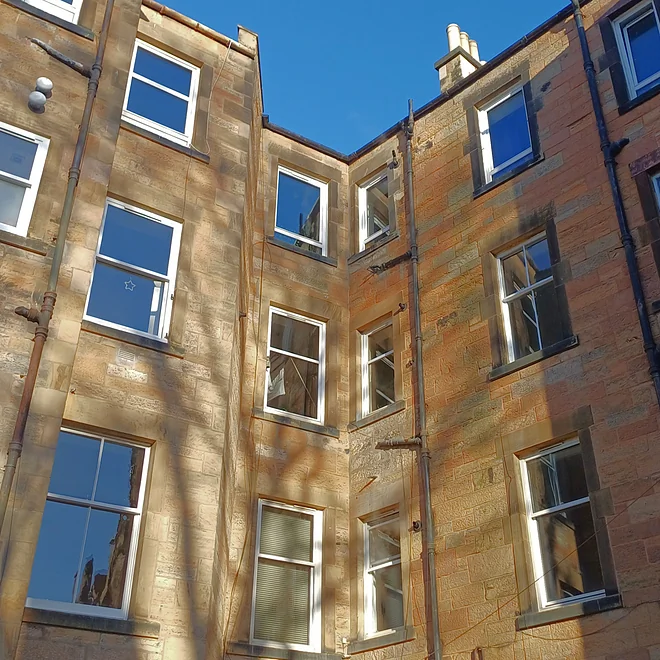
Walk down any tenement stair in Glasgow or Edinburgh and you'll find timber sash and case windows still doing exactly what they were built for over a century ago: letting in light, controlling airflow, and holding a facade together. They're often written off as draughty relics, but understood properly, they're a genuinely clever piece of building design, and one increasingly worth protecting rather than replacing.
How sash and case windows actually work
A sash and case window is a box frame containing two vertically sliding sashes, each hung on cords running over pulleys to concealed counterweights. That balance mechanism is the clever part: it lets a heavy pane of glass be raised or lowered with one hand, and held open at any point without props or catches.
Traditional joinery used slim timber glazing bars to hold smaller panes of glass. This was a practical response to the limits of 19th-century glass manufacturing, which is also why the proportions look elegant rather than heavy. Horns at the sash corners, ovolo mouldings and staff beads are small details, but these are what give a tenement facade its rhythm, especially in a conservation area where consistent window design matters to the whole streetscape.
Hidden cords and weights balance the sash so it stays open at any height.
uPVC replacement is rarely permitted; timber repair is usually required.
Top-sash opening suits short, sharp bursts of airing rather than trickle vents.
A protected part of the building
In most Scottish conservation areas, sash and case windows are treated as an integral part of a listed or protected building's character, not just a functional opening. Planning authorities frequently require like-for-like repair rather than a swap to modern uPVC units, and unauthorised changes can trigger enforcement action.
For factored tenements this matters practically: window works can be a common repair decided collectively, and any deviation from the original pattern can affect an entire close's consistency, and its saleability.
Hot, cold — and the case for lüften
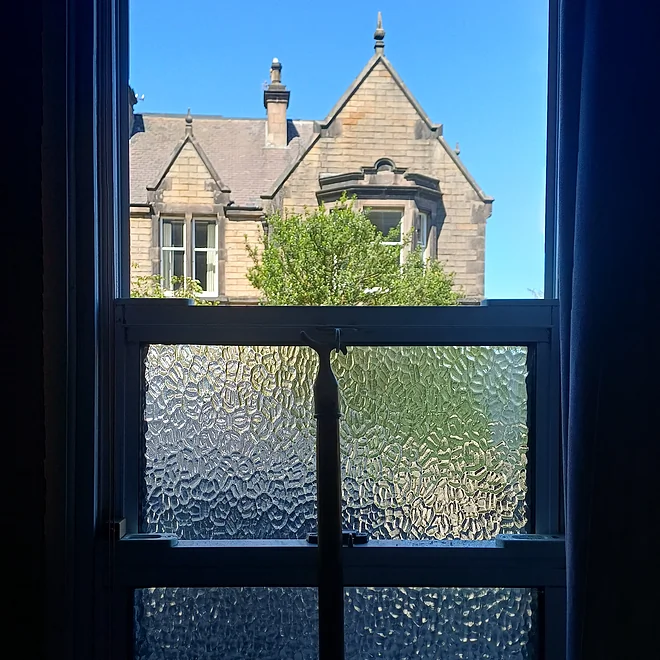
Timber sash windows have a reputation for draughts, but poor performance is usually down to worn cords, gaps and failed putty rather than the design itself. Properly draught-proofed sashes perform respectably, and their mass and smaller pane sizes can help regulate solar gain better than large uPVC units in south-facing rooms during summer. Technology is also avaliable to double-glaze older sashes without changing their appearance: stick-on or magnetic panes are attached internally, which can bring heat loss down to modern standards.
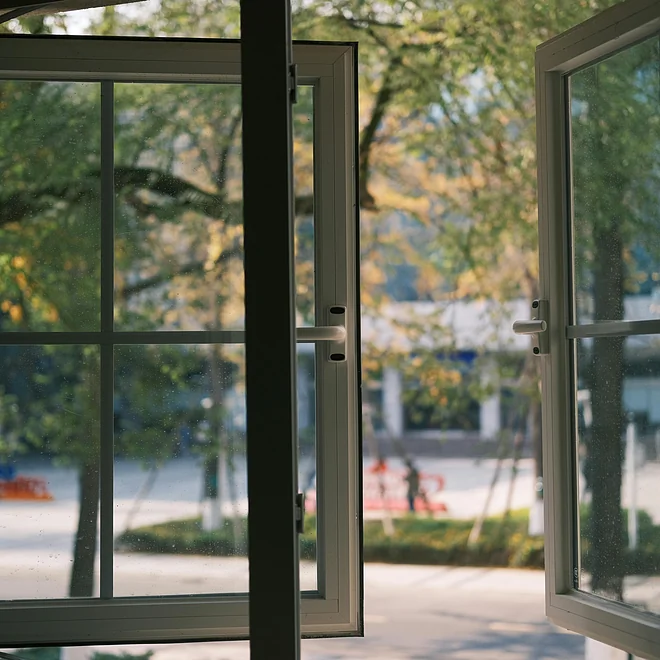
They're also well suited to controlled natural ventilation. As we covered in our piece on "lüften", opening the top sash for a short, sharp burst — rather than leaving a window ajar for hours — clears stale air and moisture quickly without losing much heat, which suits tenement flats with high ceilings and shared stairwells prone to condensation.
What modern renovation actually involves
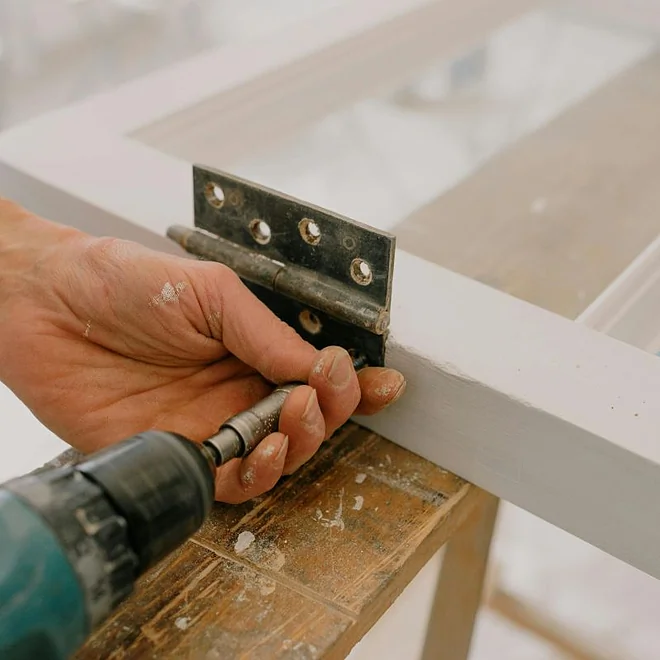
Restoring sash and case windows today rarely means full replacement. Draught-proofing fitted into the existing frame, re-cording, timber splicing repairs to rotten sections, and slim-profile secondary glazing can bring performance close to modern standards while keeping the original joinery and glass.
Secondary glazing in particular is increasingly common in conservation areas, since it's reversible, doesn't alter the external appearance, and can cut noise and heat loss significantly. Where a sash is beyond repair, exact-match replacement in timber remains the standard expected by planning authorities.
Takeaway
Repair first, replace as a last resort
Well-maintained timber sash and case windows can be repaired indefinitely and rarely need full replacement — the cases where they do are the exception, not the rule.
Sash and case vs uPVC
uPVC windows are cheaper up front and need less day-to-day maintenance, which makes them tempting — but in a tenement context they come with real trade-offs. They're rarely permitted in conservation areas, they usually can't be repaired piece by piece (a failed unit means full replacement), and they typically have a shorter functional lifespan than well-maintained timber.
Sash and case windows, by contrast, can be repaired indefinitely, hold their value in a period property, and — done properly — perform close to modern standards without compromising the character that makes tenement flats desirable in the first place.
There is also currently a glut of companies in Scotland contacting homeowners to install uPVC windows, often prompted by inquiries about home improvement or energy efficiency grants. They are often looking fo a fast sale, and don't necessarily prioritise the appropriate glazing solution for a tenement flat. Restoring the original windows is usually a better solution, but it's important to find a contractor with the skills and experience to repair and restore traditional timber joinery. This can be challenging, but ultimately worth it: a poor repair can be worse than no repair at all.
Getting it right as an owner
Window repairs are one of the most common sources of disagreement in factored tenements, precisely because they sit at the intersection of cost, appearance and planning rules. Getting early advice — before work starts, not after a mismatched replacement goes in — saves owners money and protects the building's character.
At 7days, we help owners navigate exactly this kind of decision: sourcing the right contractor, checking conservation requirements, and coordinating agreement across the stair so repairs happen once, done properly.
Further reading
The following guides cover sash and case windows in more detail, including maintenance, ventilation and conservation area requirements.
World Heritage - Edinburgh
This guide from the Edinburgh UNESCO World Heritage site covers the basics of sash and case build and operation, ventilation, solar gain and heat retention, and performance and maintenance tips:
Timber Sash and Case Windows: A Seasonal Guide to Ventilation, Insulation and ShadingHistoric Environment Scotland
The Historic Environment Scotland site has a downloadable PDF covering maintenance and operation, including detailed diagrams.
Short Guide: Sash and Case Windows